

A Dry Garden Design
Incorporating recycled materials on-site
The brief
Inspired by a lecture by Peter Korn at the University of Bath Gardening Club, the client wanted to experiment.
The ambition was to transform a water-guzzling area by the house into a dry garden that would require less water and maintenance over time.
Overlooked from above and from the outdoor dining area, this experimental space also needed to look great. Unused building materials on site were to be thrown into the mix.
Design response
Drawing from a range of sources, including Peter Korn's books and Sally Bower’s Nature Rising from the Rubble, we redesigned the space with a layered planting system. Topsoil was moved elsewhere in the garden, while surplus materials were crushed on site and layered with gravel, sand and a thin layer of topsoil. We used a gravel mulch. Local stone forms the boundaries of the space and provides interest in among the planting.
The planting palette was selected for drought-tolerant species that would complement the surrounding borders. Existing plants were lifted and moved, opening up a wonderful view to the church.
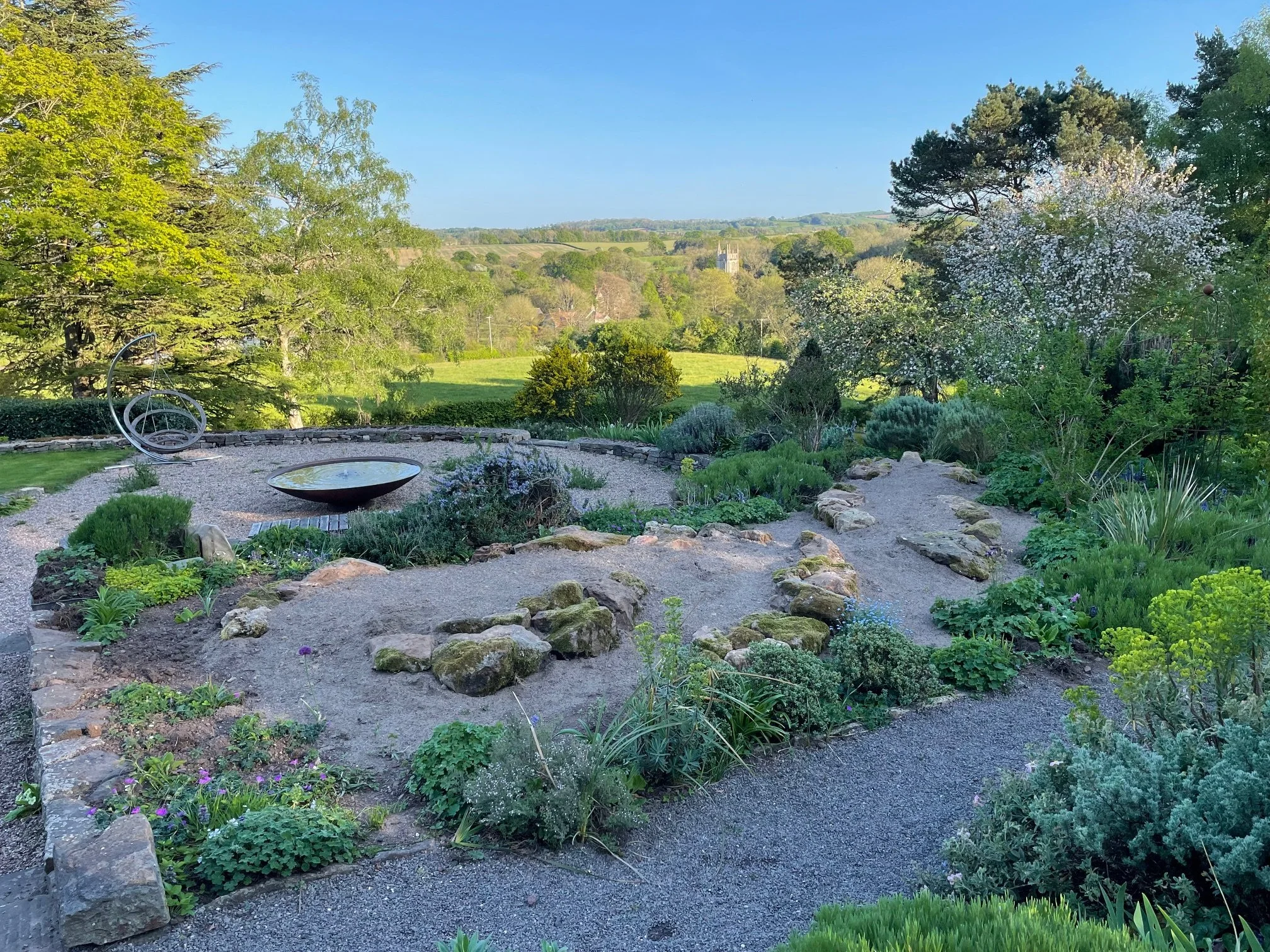
Why does planting in ‘rubble’ help plants to grow?
Deep roots: Plants push deep down into cracks and gravel to find water. This helps them to endure extreme weather conditions, including long dry spells.
Low nutrients: Lean, poor soils such as those rich in stone and sand, stop weak growth, as a result, plants look truer to how they might be found in their natural habitats, with lesser leafy, bushy growth.
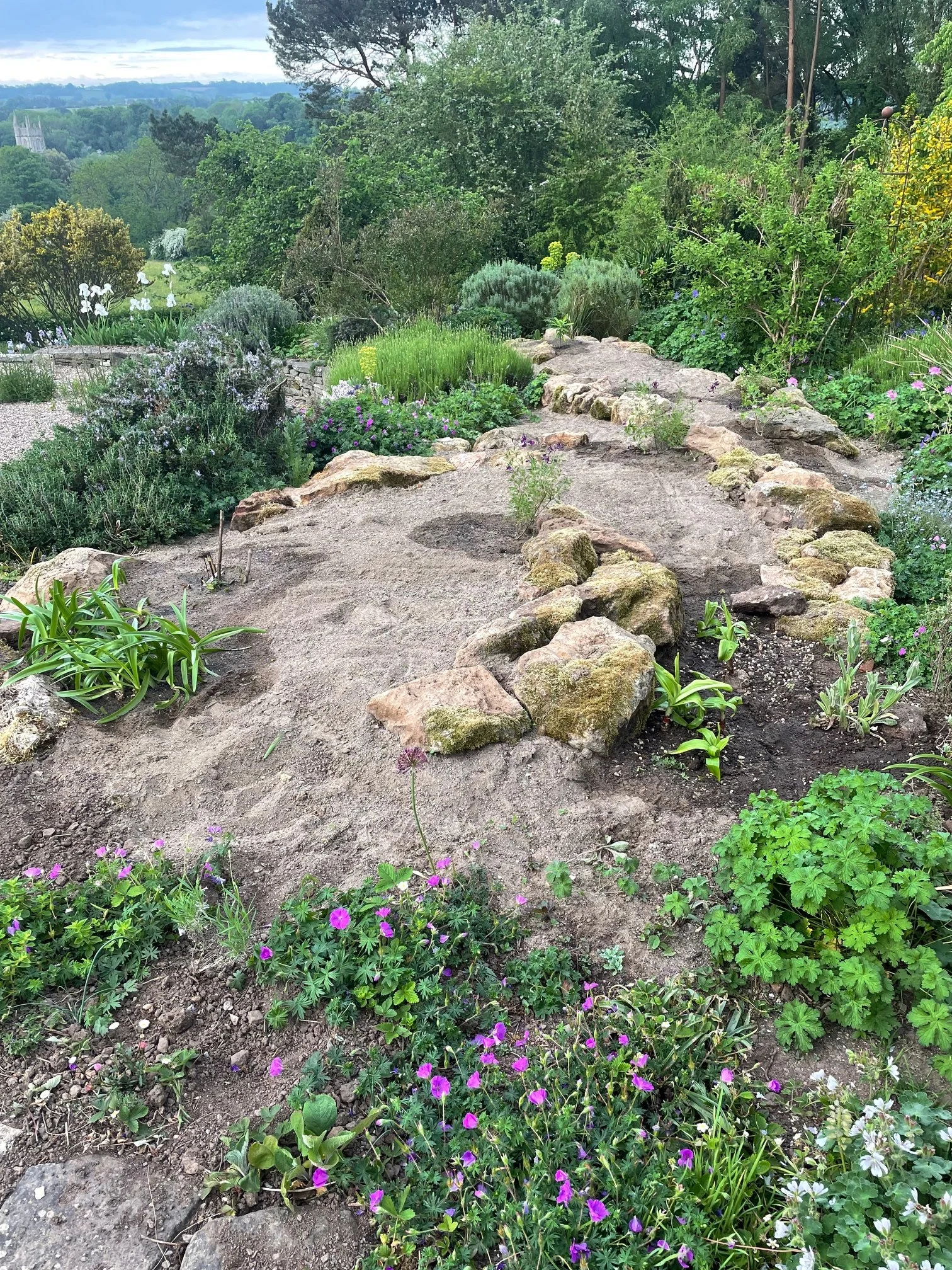
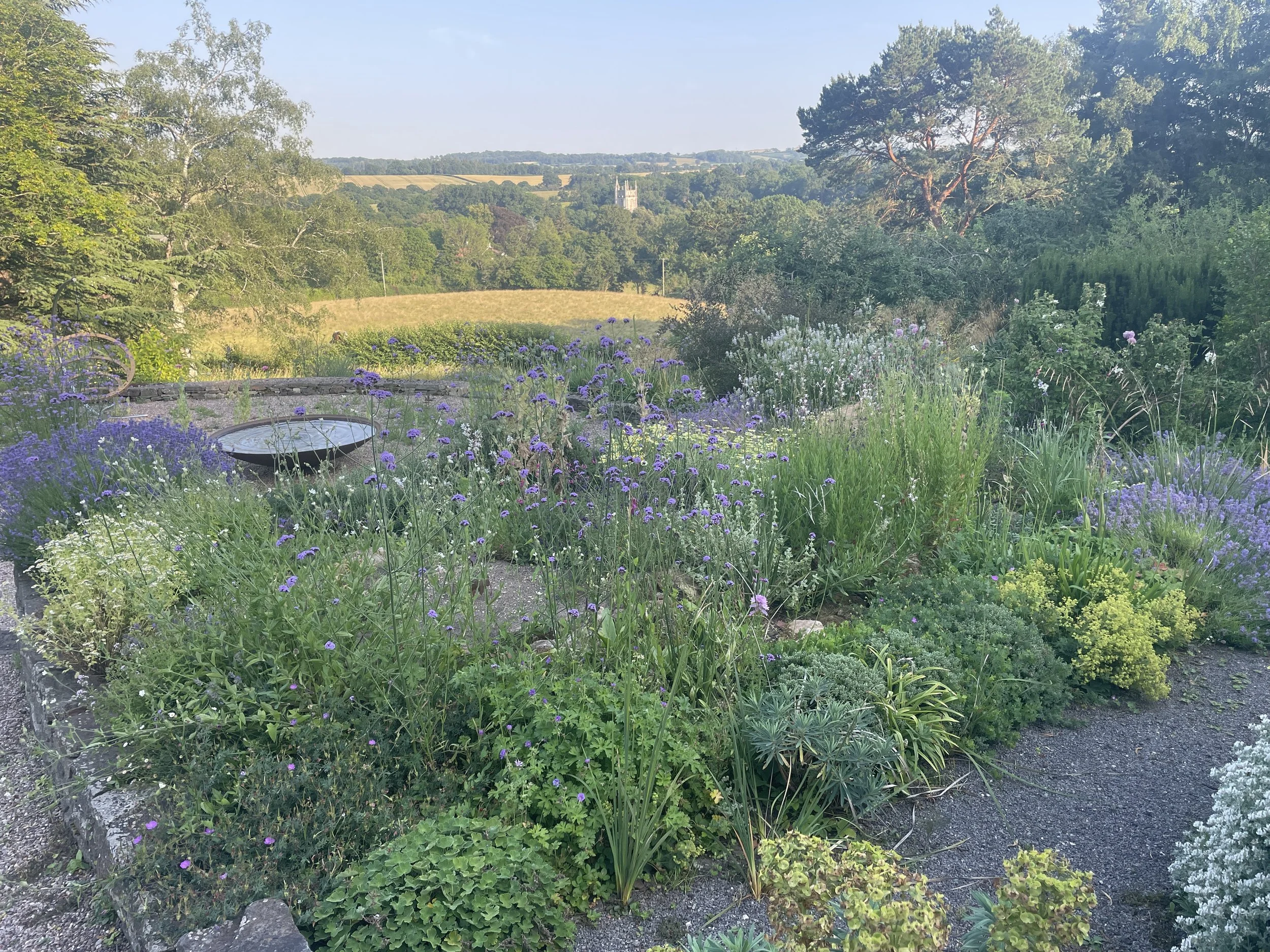
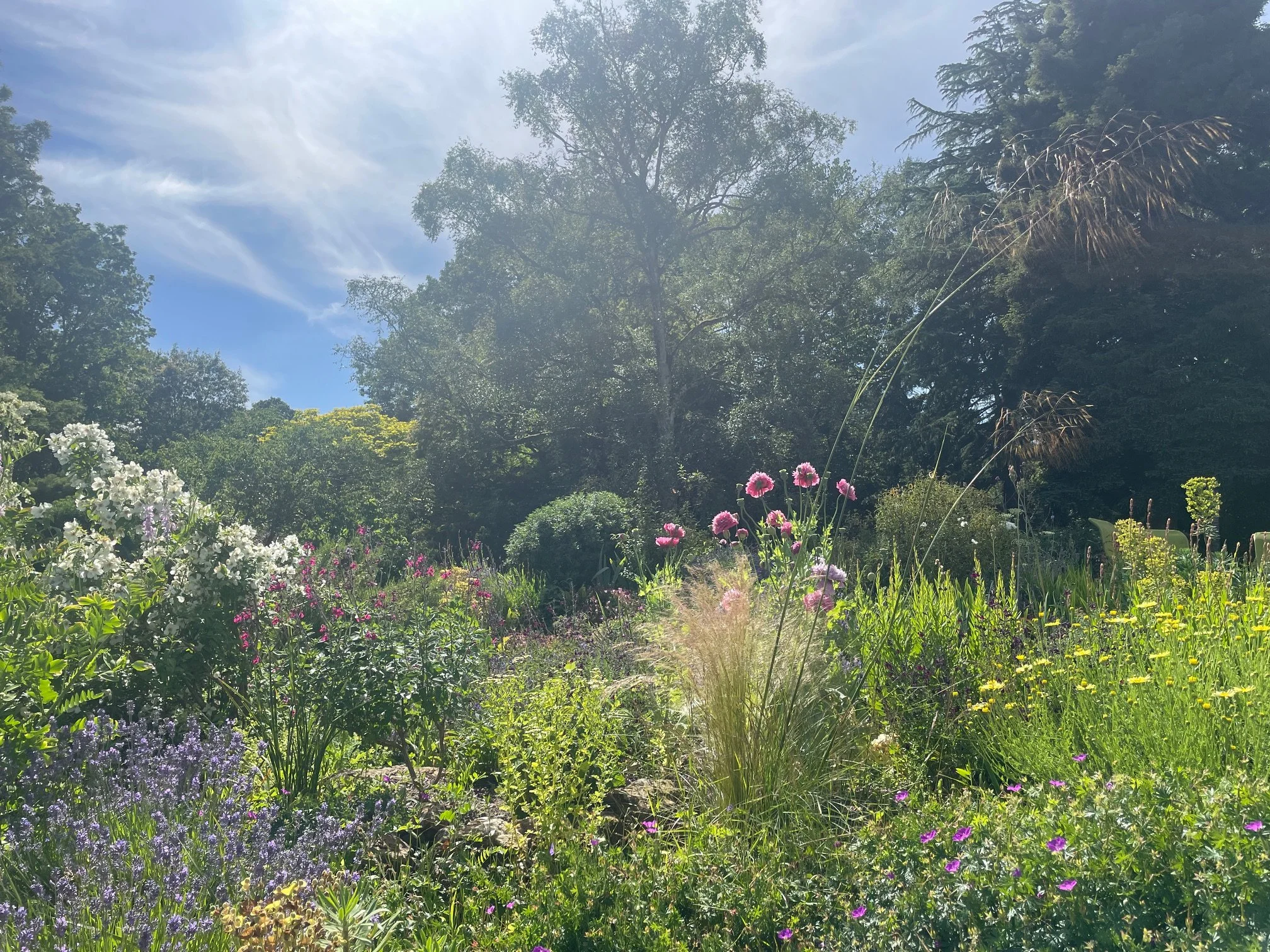
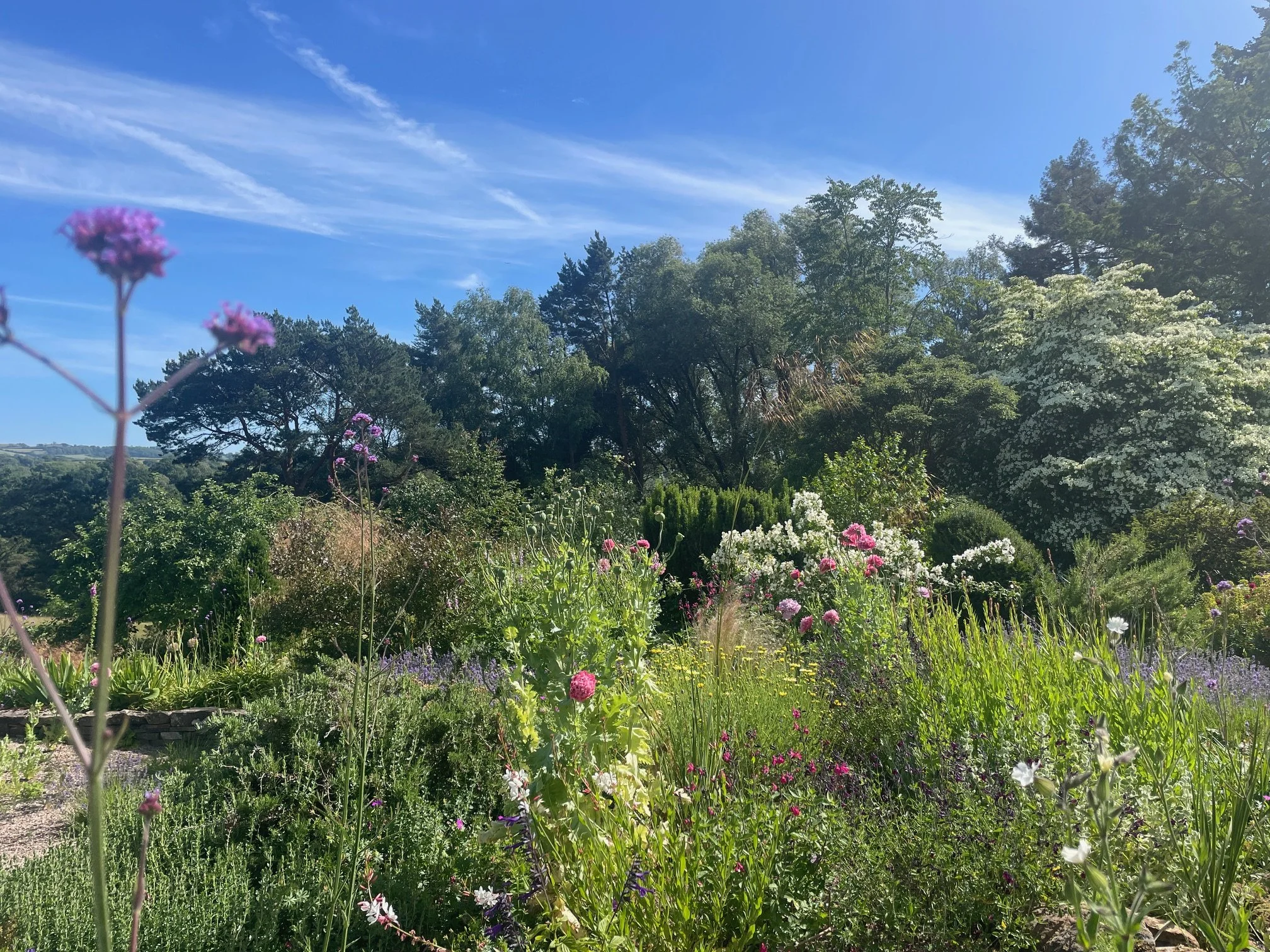
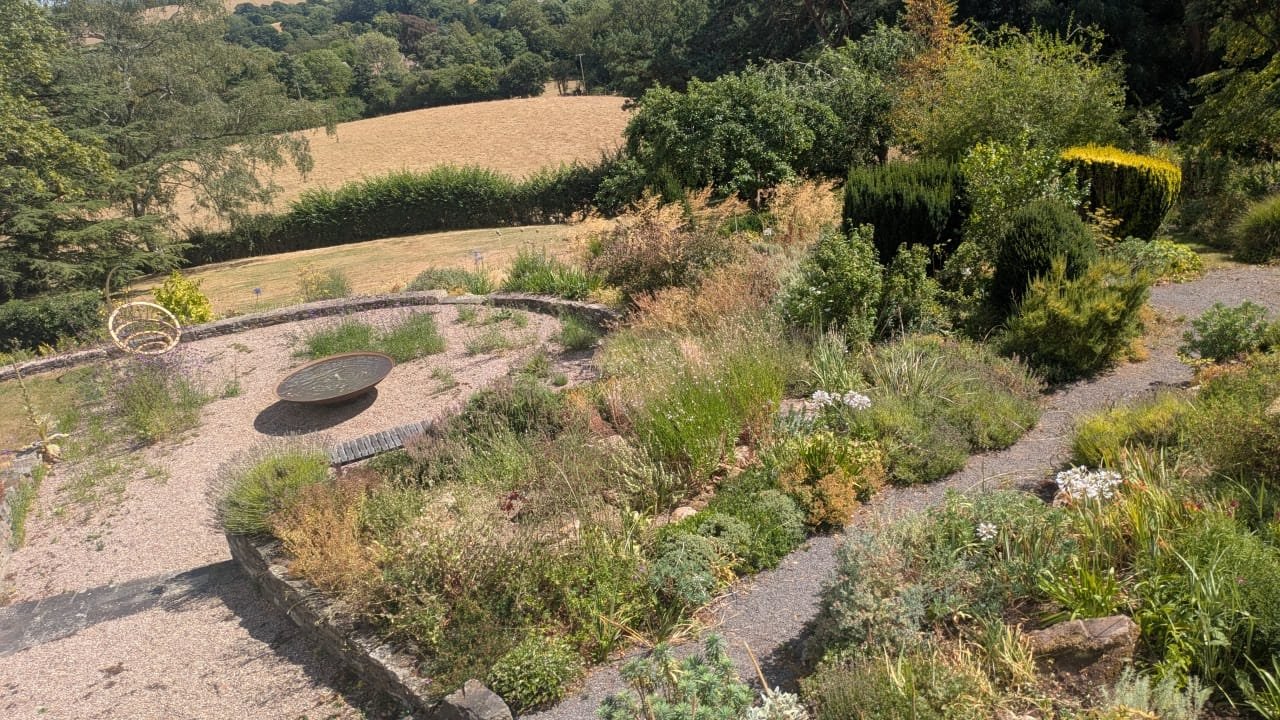
“Our dry garden has been a joy in its first year, 2025. Everything established well with just an initial soak and no watering afterwards. This summer, 2026, it was spectacular until mid‑June, with Gaura, Salvias, Ballota, Lavenders, Thyme, Agapanthus and Rosemary all at their peak. Even through the intense heatwave, the garden has stayed resilient — I’ve only watered one new plant. It’s been colourful, fun, and a real success.”
Conserving water in your garden
If you’d like to know more about the crushed aggregates used and the composition of the layers, please get in touch.
Our research has taught us that there’s a range of approaches that can be adapted to site conditions and the materials you have available. It’s been a fascinating experience, and we’d love to share our learning and cut the resource use in your garden too.
Images above: Top row: newly built. Rows two and three: planting one year on, final image Aug 2026